AxessAll · AI Integration Consultant
AI Strategy & Roadmap for a National Accessibility Platform
Active · Jan 2026 – PresentThe Problem
Accessibility at National Scale Is an Ecosystem Problem
A national government digital accessibility programme faces the same challenges wherever it runs: varying levels of accessibility maturity across entities, manual remediation that can't keep pace with issue volume, limited technical capacity, and inconsistent governance and standards enforcement. Each of these can be tackled in isolation — but doing so is like digging a well in a desert: the moment the intervention stops, the system returns to what it was.
What's needed instead is a framework that changes the conditions of the whole ecosystem at once, not a collection of disconnected point fixes.
The Approach
Design the Platform, Then Prove It With Working Systems
The strategy isn't built from assumptions — it's grounded in three working systems built in parallel: the RAG autocomplete service, the NLP analytics pipeline, and the accessibility auditing agent. Each one tests a specific claim about where AI can actually help before that claim gets written into the roadmap, so the platform architecture reflects what's been built and tested, not just what sounds plausible on paper.
The Framework
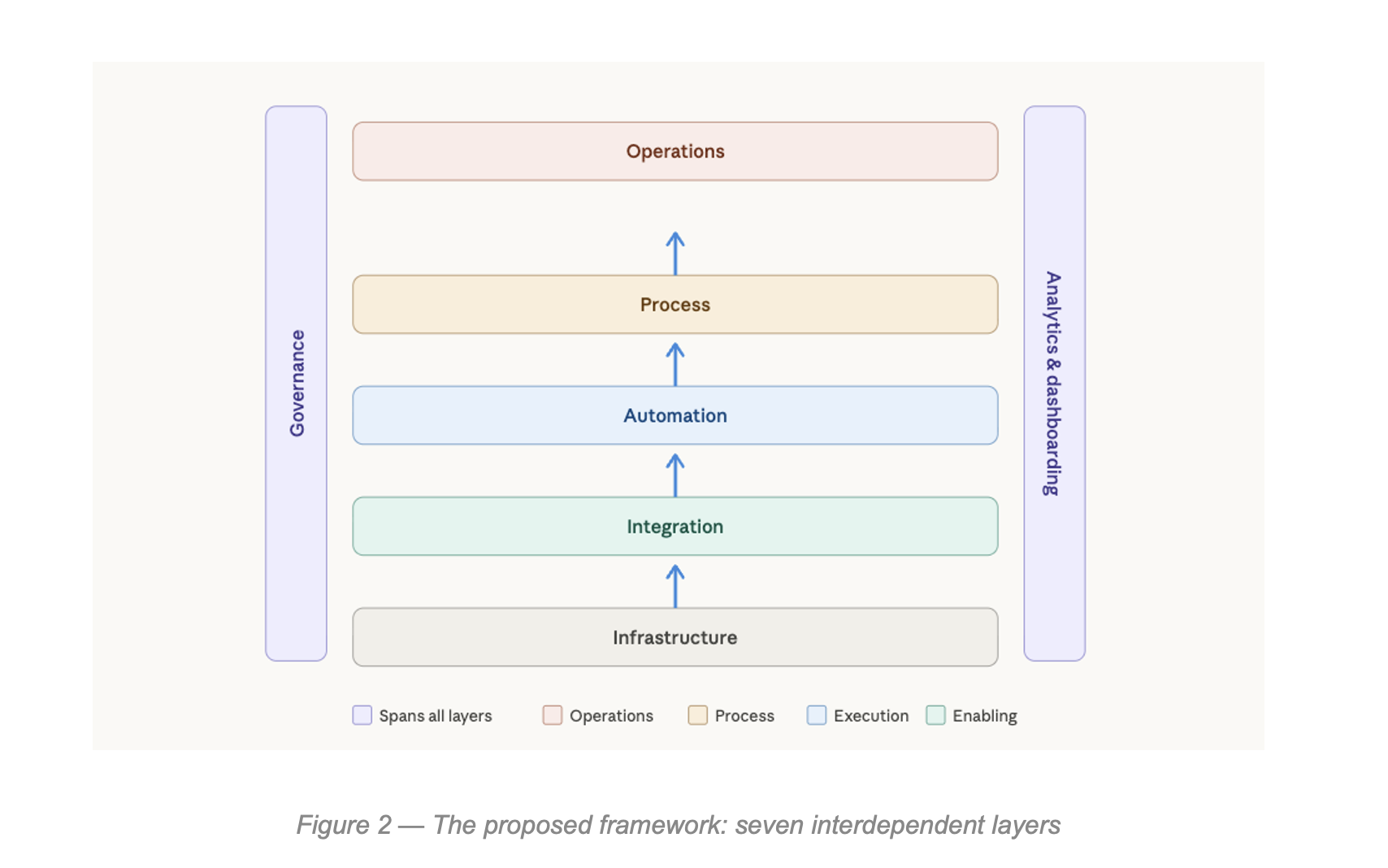
Seven Interdependent Layers
The proposed platform architecture spans seven layers: infrastructure (shared national resource pools), integration (connecting auditing agents, developer tools, and project management systems so findings become actions without manual handoffs), automation (AI agents that multiply technical capacity without multiplying headcount), process (how humans and agents work together day to day), and operations — with governance and analytics/dashboarding spanning the full stack, defining who sees what data and who makes which decisions at every level.
The Agents
Three Agents, One Connected Pipeline
The automation layer is realised through three proposed agents working as a connected pipeline rather than independent tools: an auditing agent that detects and documents issues, a developer agent that reads the issue queue and generates remediation plans with test cases, and a content agent that intervenes upstream — checking new content against accessibility requirements before it's ever published, reducing the volume of issues entering the pipeline in the first place.
Contribution
Strategy, Architecture, and Bid Development
Leading AI strategy and roadmap planning for an AI-driven accessibility auditing and remediation platform, as part of a national government digital accessibility programme — defining the platform architecture, the agent design, and a phased implementation roadmap, and contributing directly to bid and proposal development for the wider programme.
Outcomes
Current State & Direction
- Seven-layer platform architecture designed and documented, spanning infrastructure through governance and analytics
- Three-agent automation model defined — auditing, developer, and content agents operating as one connected pipeline
- Phased implementation roadmap produced, sequencing capabilities from immediate delivery through longer-term extensions
- Strategy grounded in working systems built in parallel — the RAG autocomplete service, the analytics pipeline, and the auditing agent prototype
- Direct contribution to bid and proposal development for the wider national programme
The Seven-Layer Framework